Summary
Eggy Party is a mobile physics party game featuring Eggy Workshop, a robust game engine that lets players craft their own maps and modes.
Over my 8-month internship at NetEase Games, I supported the Eggy Studio team bringing the game to the US - developing promotional maps, documenting level design processes, and assisting engine development.
Overview
Timeline
May 2024 - December 2025
(8 months)
Role
Map Design Intern
Tools
Eggy Workshop
Fandom Wiki
NetEase POPO
Team
395+ team members; map design subteam of 6
Project Goals
Embrace Eggy’s physics comedy
Showcase new engine features to the map-making community
Delight players with levels, collabs and events
My Contributions
-
Designed and scripted 15 bi-weekly levels.
Scripted original mechanics for levels in Eggy Workshop.
-
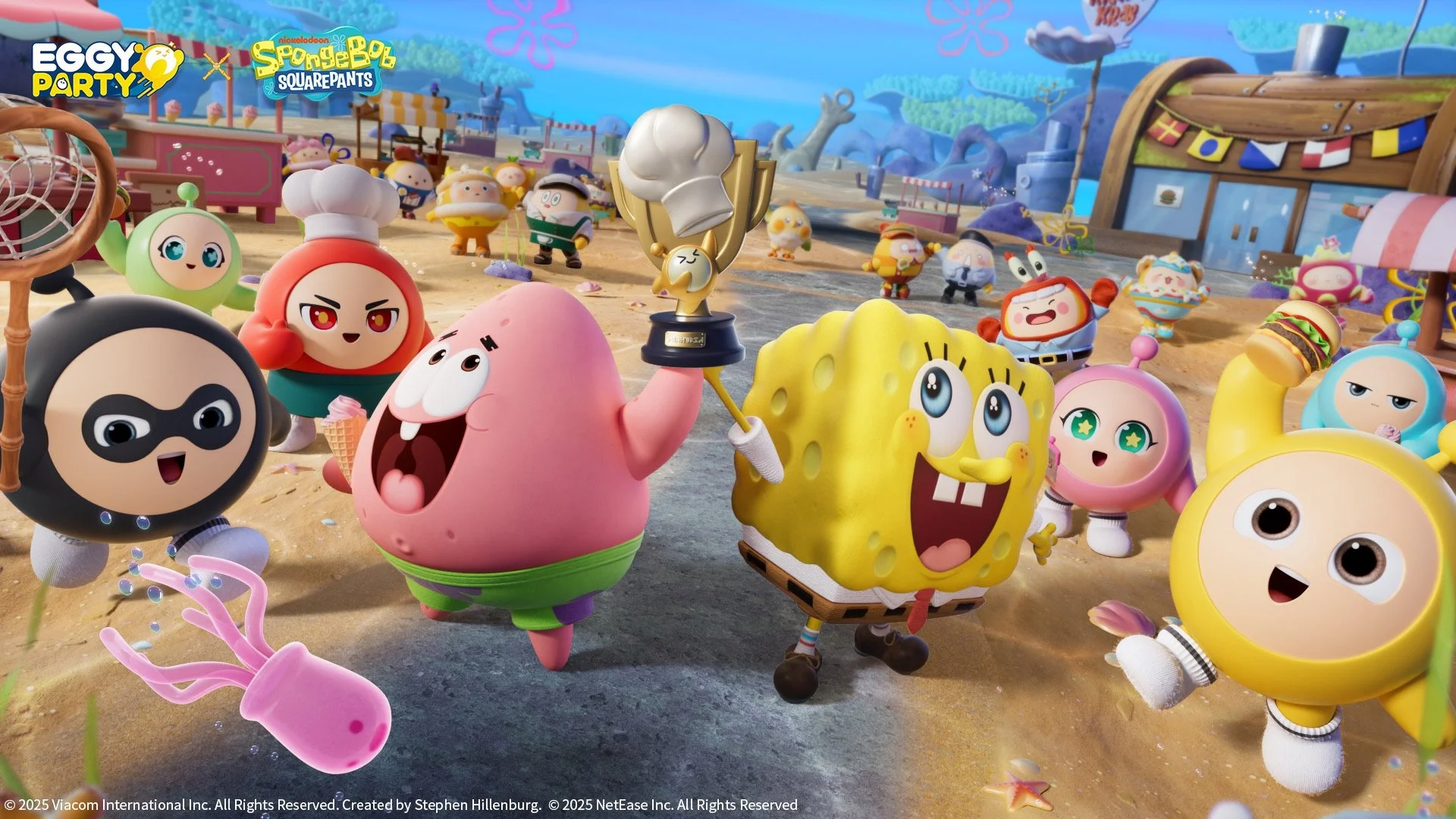
Designed emotes, cosmetics, and features for collab events with SpongeBob SquarePants and Tom and Jerry.
Created event maps for Eggy’s Back to School, Halloween, and Christmas seasonal events.
-
Delivered pitches, prototypes, and level briefs for all maps via NetEase POPO.
Maintained the Eggy Party Wiki and level design tutorials.
Mentored top creators on the Eggyverse platform.
-
Playtested maps weekly with community players and collected gameplay and marketing surveys.
Promoted Eggy Party through social media content following US launch.
Gathered player feature requests and feedback for the engine team, advising on editor usability.
Sample Playthroughs
Gameplay Design Breakdown
How do you make delightful maps - fast?
My internship at NetEase had clear goals: rapidly making maps players would love and acting as a direct line between players and developers.
My first step was isolating what players liked about Eggy and its engine: that maps felt spontaneous, unique, and delightful.
With each map, I explored one central idea and created a cohesive experience with polished, accessible gameplay.
Highlights
My work for Eggy ran the gamut between genres, features, and teams. Here are some highlights.
-
I worked on collab events for SpongeBob and Tom and Jerry, designing the hook and jellyfishing lobby mechanics for SpongeBob.
I delivered briefs to the design team in Hangzhou, detailing popular episodes from the source material and relevant feature proposals to deliver events that were true to each series’ identity. -
I created maps for promotional events, including the Take Me Dare summer horror showcase, Back to School, Halloween, and Christmas. Each event gave me a strong theme to work with, which I’d elaborate on and find the absurdity in.
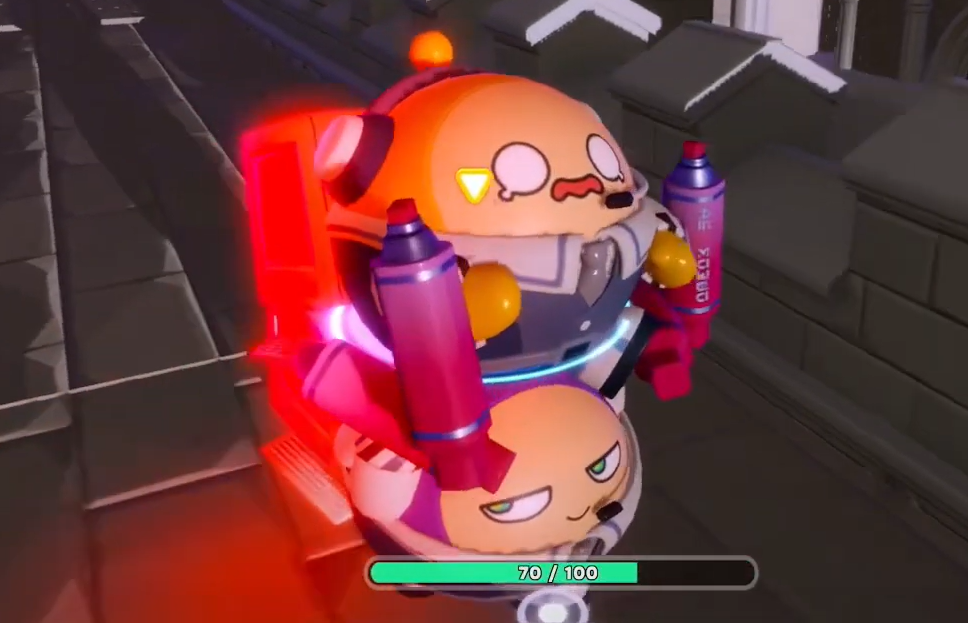
Fight the Principal, for Back to School, made school a surreal factory that turns students into graded papers. The map culminates in a rooftop boss fight with the Principal.
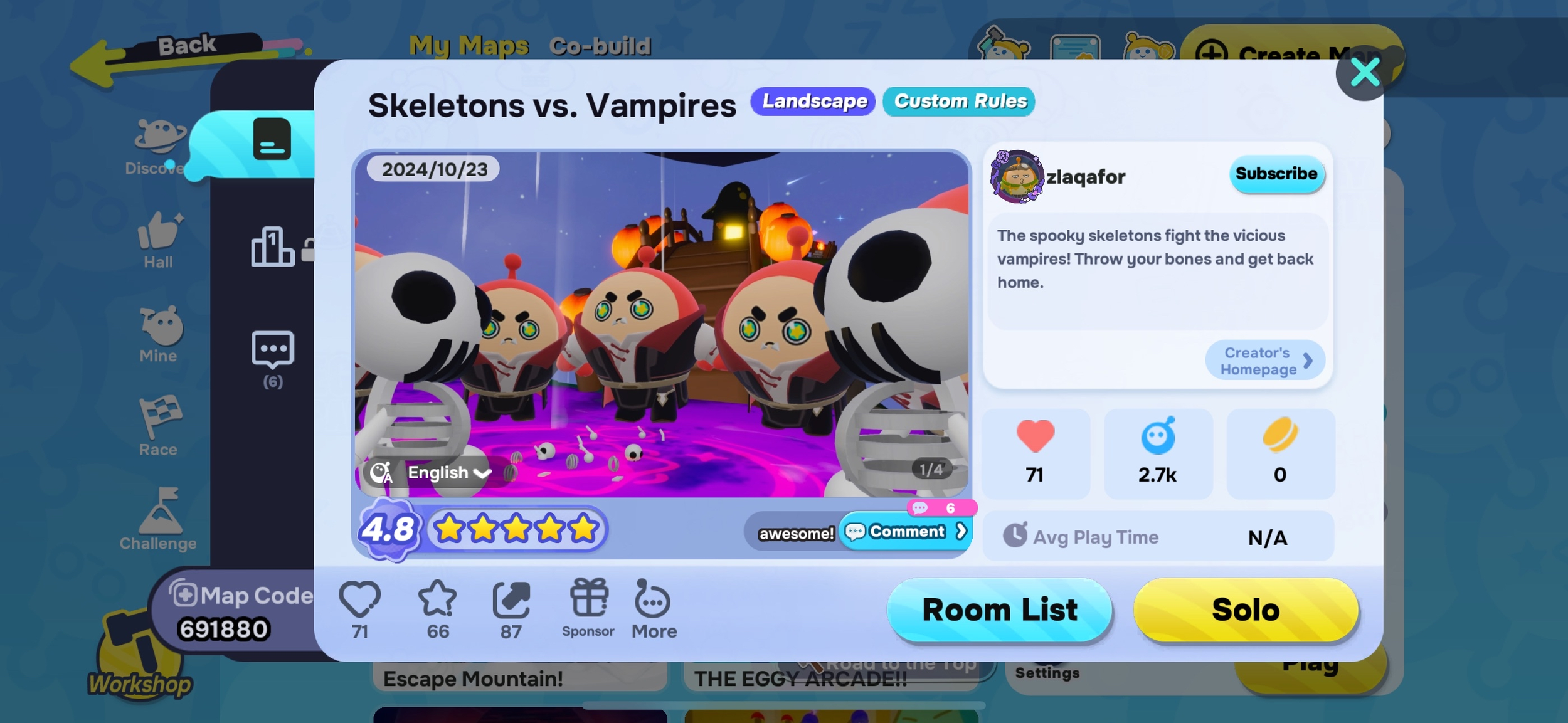
Skeletons vs. Vampires gives you one resource for health and ammo: bones! Vampires rapidly drain your ammo, but explode into bones when defeated.
Sneaky Snowman pits a snowman against a house full of spoiled kids waiting for Santa. If they see you, they pelt you with coal! Fridges and AC units heal you, The Elf on the Shelf gives you hints, and the final challenge is a trek through a hot greenhouse. -
I maintained the Eggy Party Wiki, writing several level design tutorials for community map creators and documenting new engine features. I’d often direct new map makers to these tutorials, and they’d form the basis of player-made tutorials as well.
-
My maps demonstrated new engine features as they were added, including the ability editor, level system, currency system, and cutscene animator.
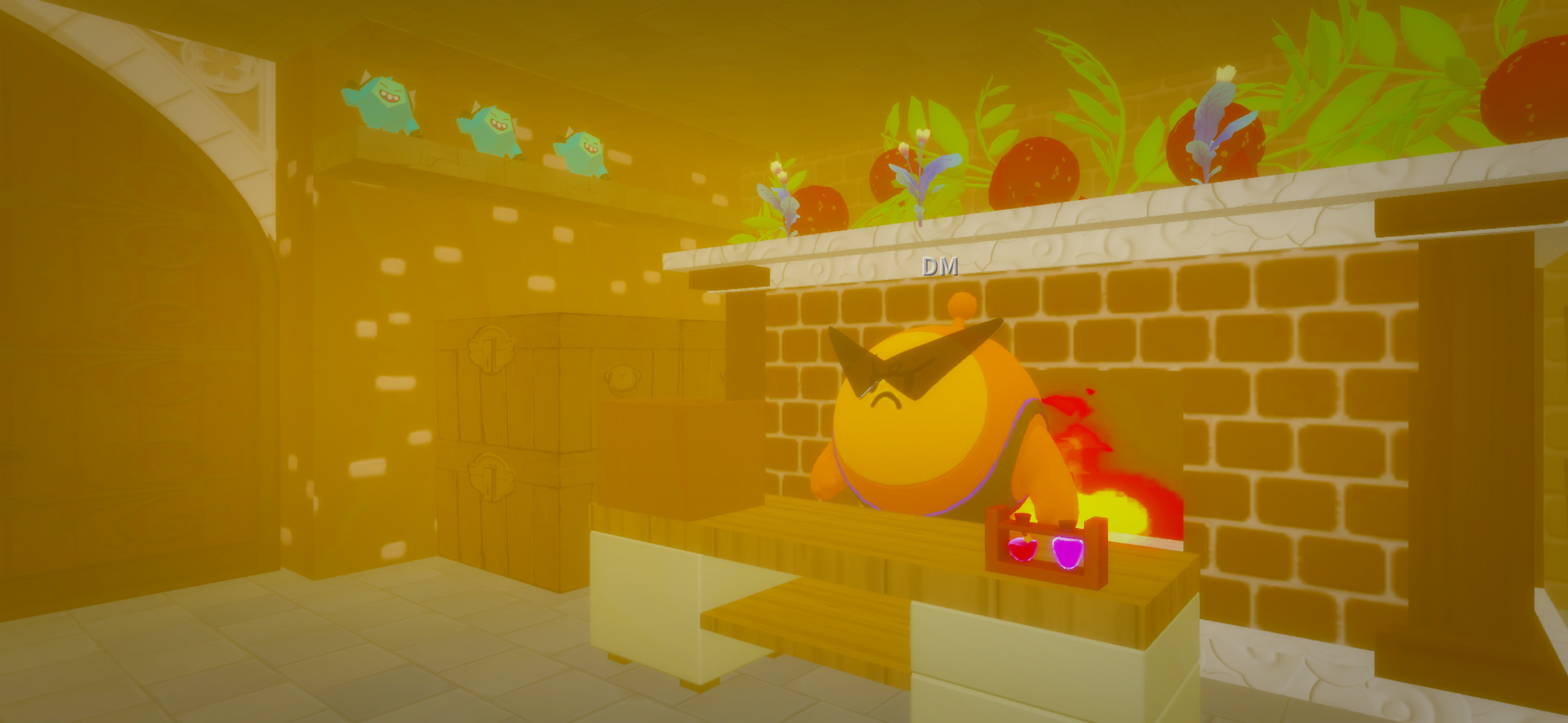
The Eggsorcists series used the ability and NPC systems to create various enemy types and combat setups, including short-range zombies, long-range devils, and boss fights.
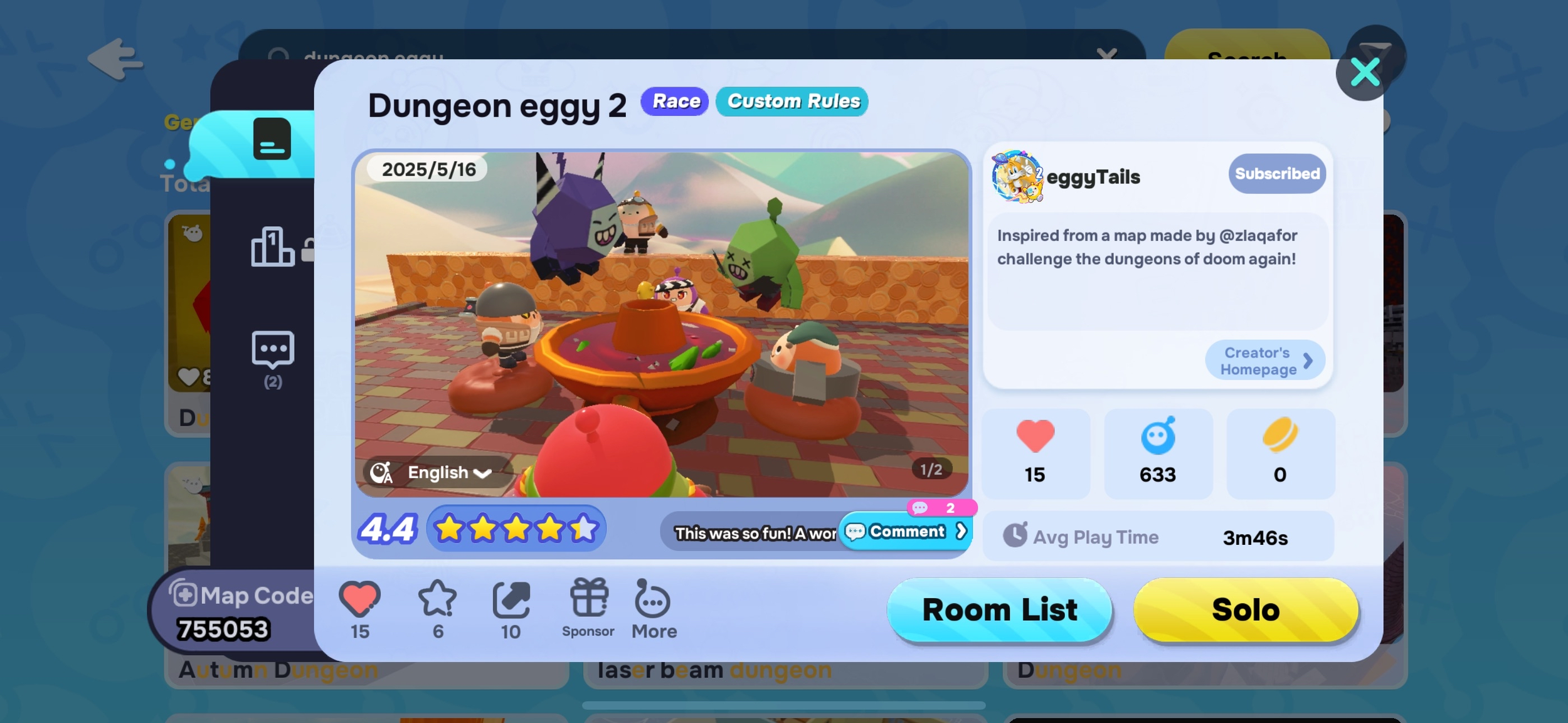
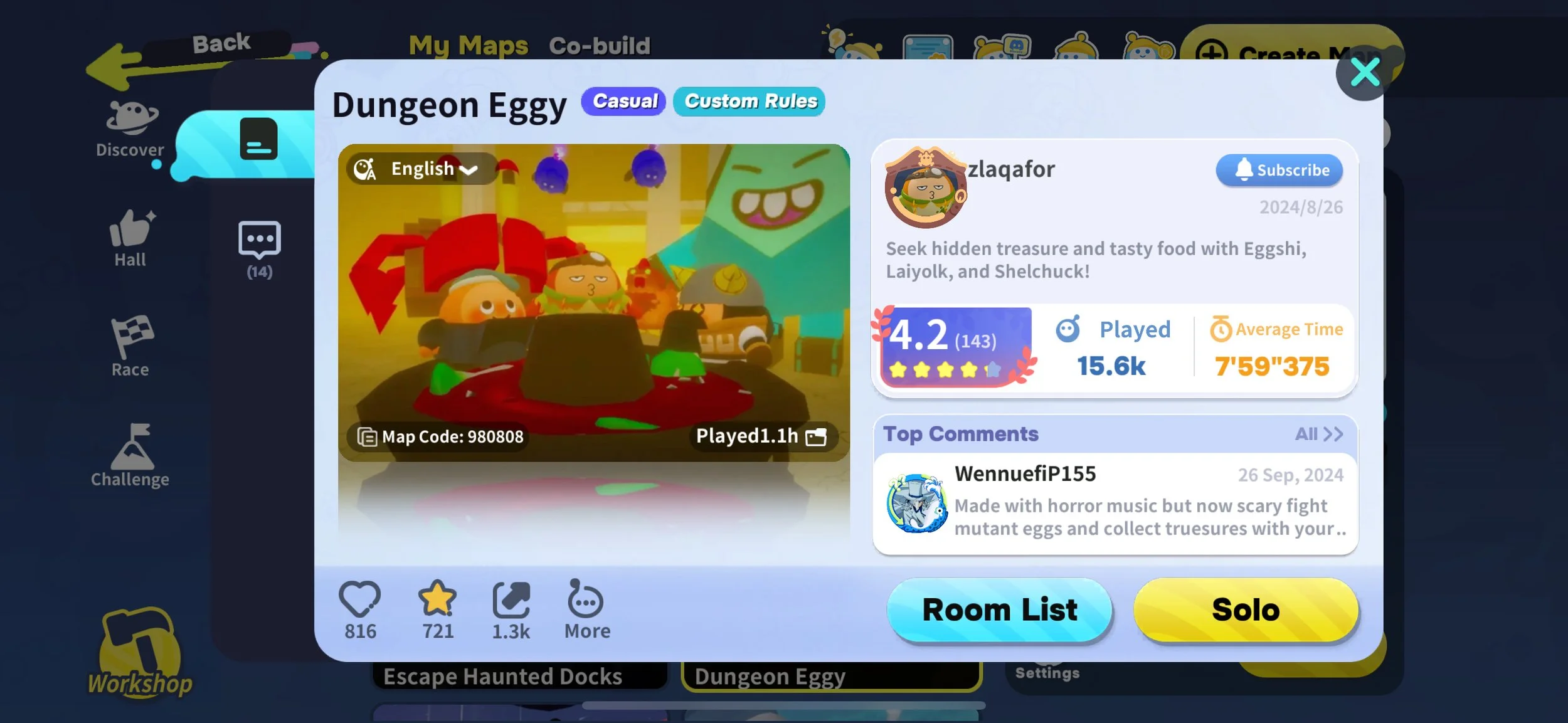
Dungeon Eggy used the level system to reward players stats and abilities as they found more food, with a similar focus on enemy variety.
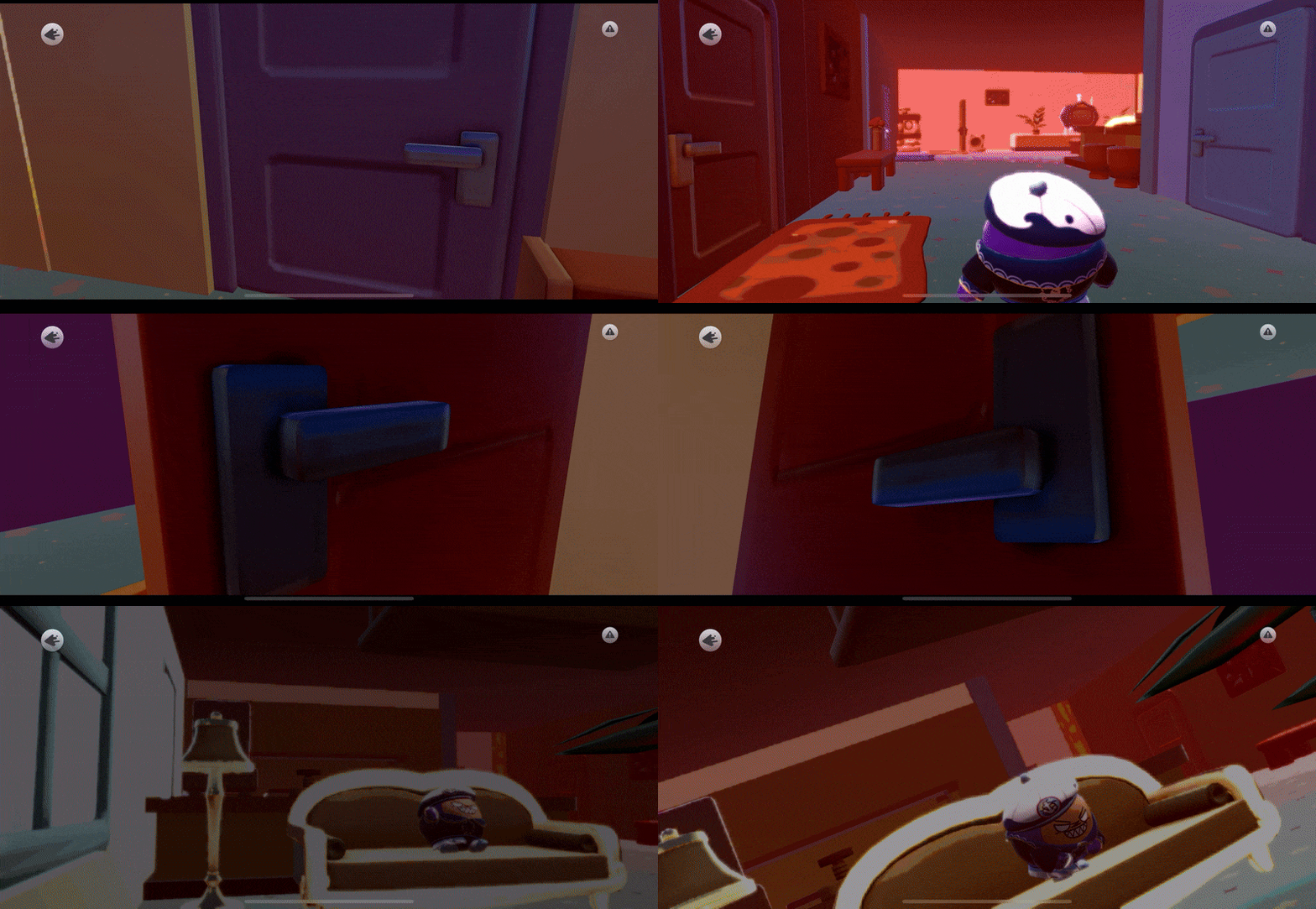
Escape Mountain! featured multiple animated cutscenes, showing how players could sequence a map with compelling narrative beats.
Level Design Breakdown
Goals
-
![]()
Make 'em Laugh
Physics comedy is a core pillar of Eggy Party’s design. My maps used slapstick, co-op, and absurd scenarios to create compelling, repeatable gameplay.
-
![]()
Short and Sweet
Maps couldn’t overstay their welcome. The mobile and platformer formats both prize short play sessions through dense and rewarding levels, and this was core to Eggy’s design.
-
![]()
Push the Limits
My maps had to reflect a higher production value and set the standard for community creators, keeping up to date with what Eggy Workshop could achieve.


Process
The team and I held our levels to a high standard and required rapid delivery for events and collabs. Starting without much definite structure, I developed my process to prove out ideas, iterate quickly, and actively respond to the community.
-
Each map started as a short concept pitch presented to the leads in Hangzhou. This would include gameplay, art style, beats, promo concepts, and the purpose of the map.
I’d present 2-3 pitches each week with associated prototypes, and the preferred choice would move on to blocking. -
Each week, I delivered rapid prototypes showing core gameplay and mood for each pitch, often one mechanic or beat.
For example: the bones system in Skeletons vs. Vampires, or the Proton Pack attack in Eggsorcists. -
I took approved prototypes through rapid blocking and scripting passes.
Full drafts for testing traversal and combat would take 3 days, with remaining time used for set-dressing and formal playtesting before presenting the draft at standup. -
I took a micro pass at each map on the second week, fleshing out smaller spaces with their own props and content.
I would work on promo content, surveys, and tutorials during this phase as well.
-
I recruited players from the Eggy community to test maps and provide user experience surveys about the game in general.
Player and team testing informed my map iterations, which I’d present each week at standup along with UX feedback.
-
After releasing a map and posting its promo content, I’d update as necessary to resolve any remaining UX issues or bugs - most often when a new engine feature was implemented or revised.
Having a direct line to players in comments and the Eggy Discord helped me refine my process over time and get a better notion of what the Eggy community was interested in.


Rules
-
![]()
Build on Simple Ideas
Eggy is a mobile game, played by a broad range of ages worldwide.
For a level to work, it has to be novel, easy to pick up and play, and ever-evolving as you play. I strove to distill the simplest concepts I could and take them in unexpected new directions. -
![]()
Mind the Details
Every moment of a level needs a reason to exist. Every space needs to feel crafted and alive.
In every level, I asked: Why is this space here? What makes it compelling?
If a space is transitional or side content, how can I make it entertaining?
That mindset consistently turned mundane spaces into fun ones. -
![]()
Levels are Stories
Candy rocks above an ocean of tar, leading to the goal: a faraway peak with the skeletons’ graves.
I approached my Eggy levels as sets of spatial and gameplay beats. Some were more heavily sequenced while others were more open-ended, but each needed a sense of progression and change.


Player Response
-
![]()
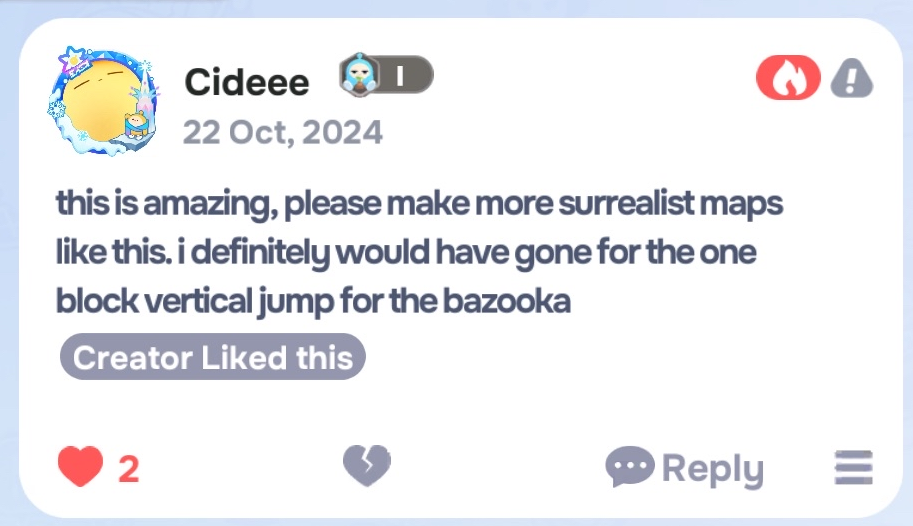
More Please
-
![]()
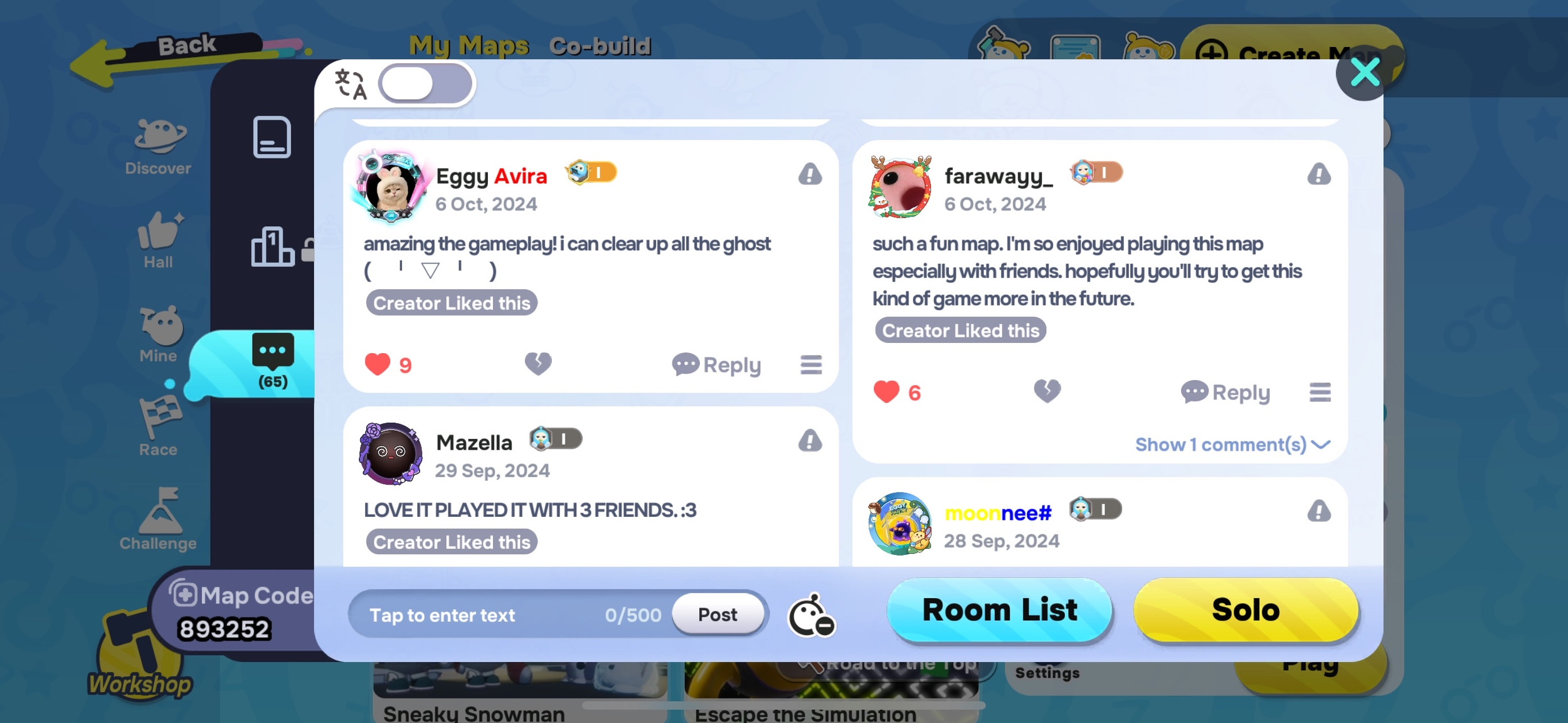
Co-Op Stories
-
![]()
Fan Maps!
-
![]()
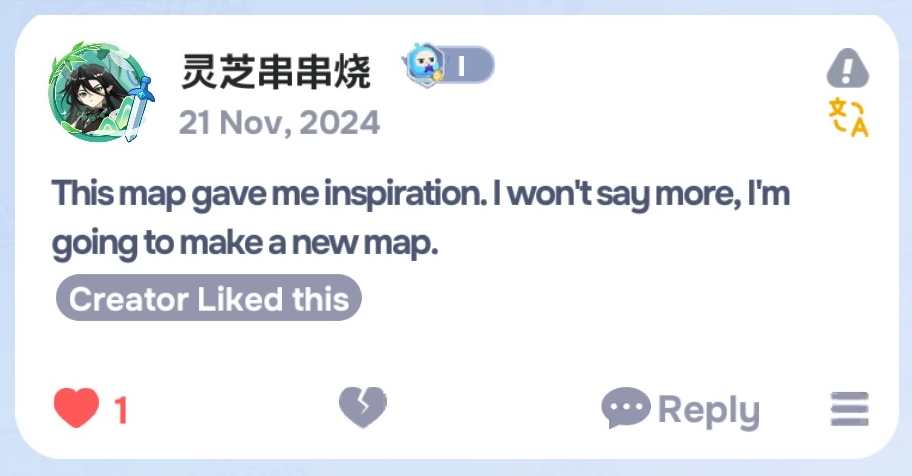
Inspiration
-
![]()
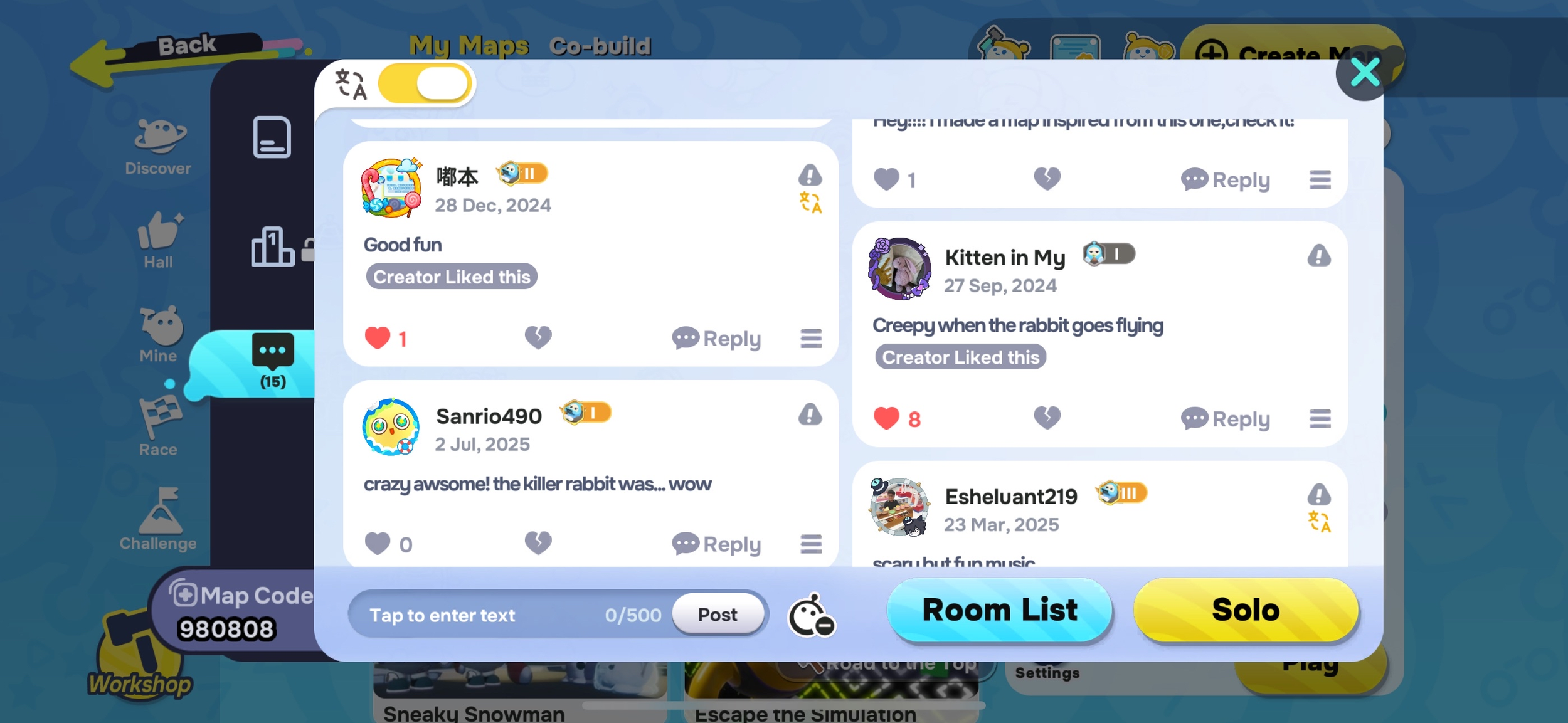
Reactions to the Dungeon Eggy Boss