Summary
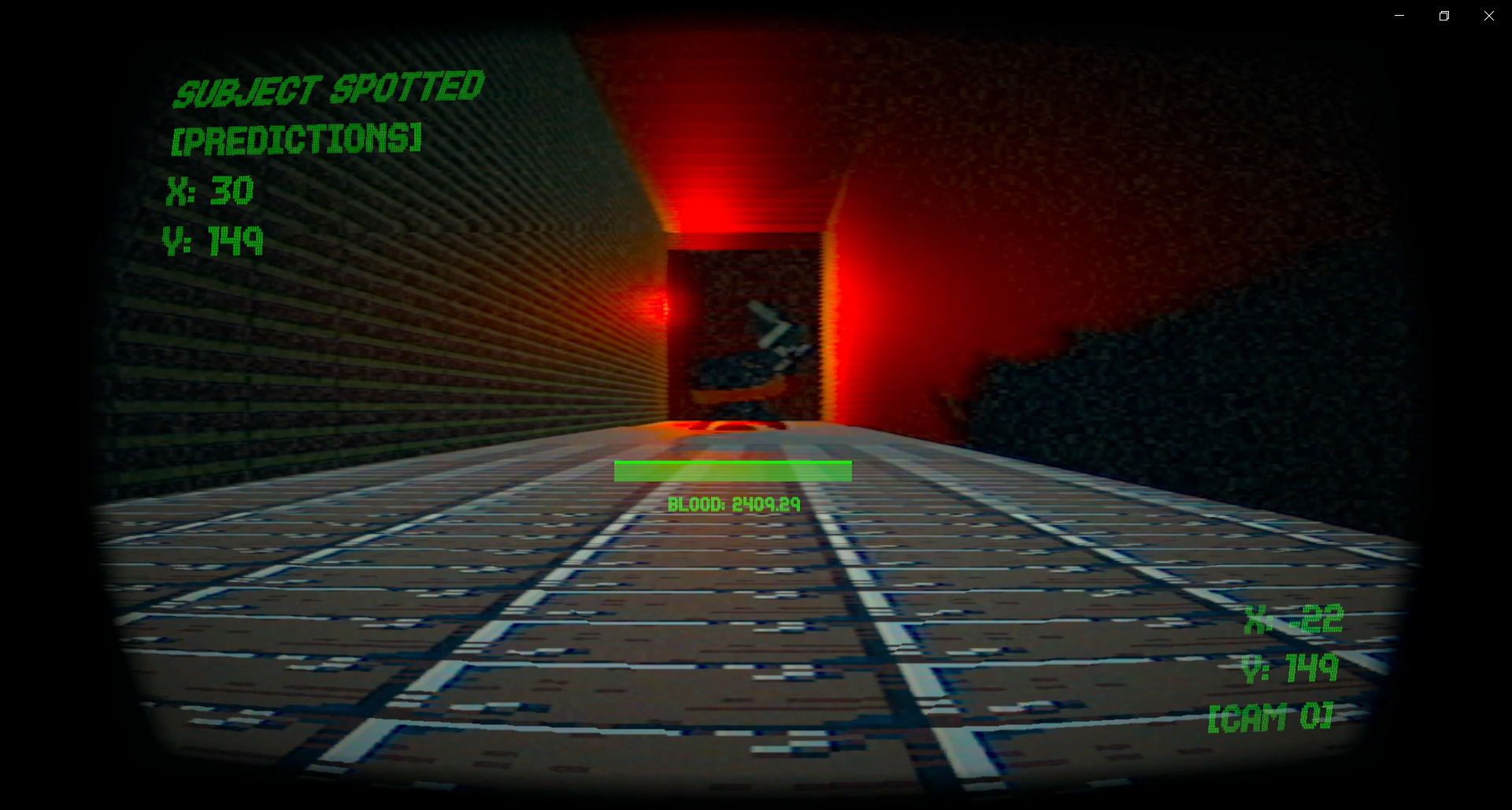
BLEED RUNNER is a 2.5D cyberpunk beat-em-up made in Unity.
A lone knight seeks the cure for a plague on a mysterious spaceship - only to be infected herself. Pummel, throw, and live off the blood of your enemies in a mad dash to the exit.
BLEED RUNNER was my project for USC’s Intermediate Game Design class, and my first game shipped to Steam, developed from January-May 2023.
Overview
Timeline
January 2023 - May 2023
(5 months)
Role
Game Designer
Tools
Unity
Figma & Notion
Team
2 core developers
3 audio designers

Project Goal
Building dread that gives way to a rip-roaring power fantasy.
My Contributions
-
Designed and implemented core mechanics:
player abilities
enemies
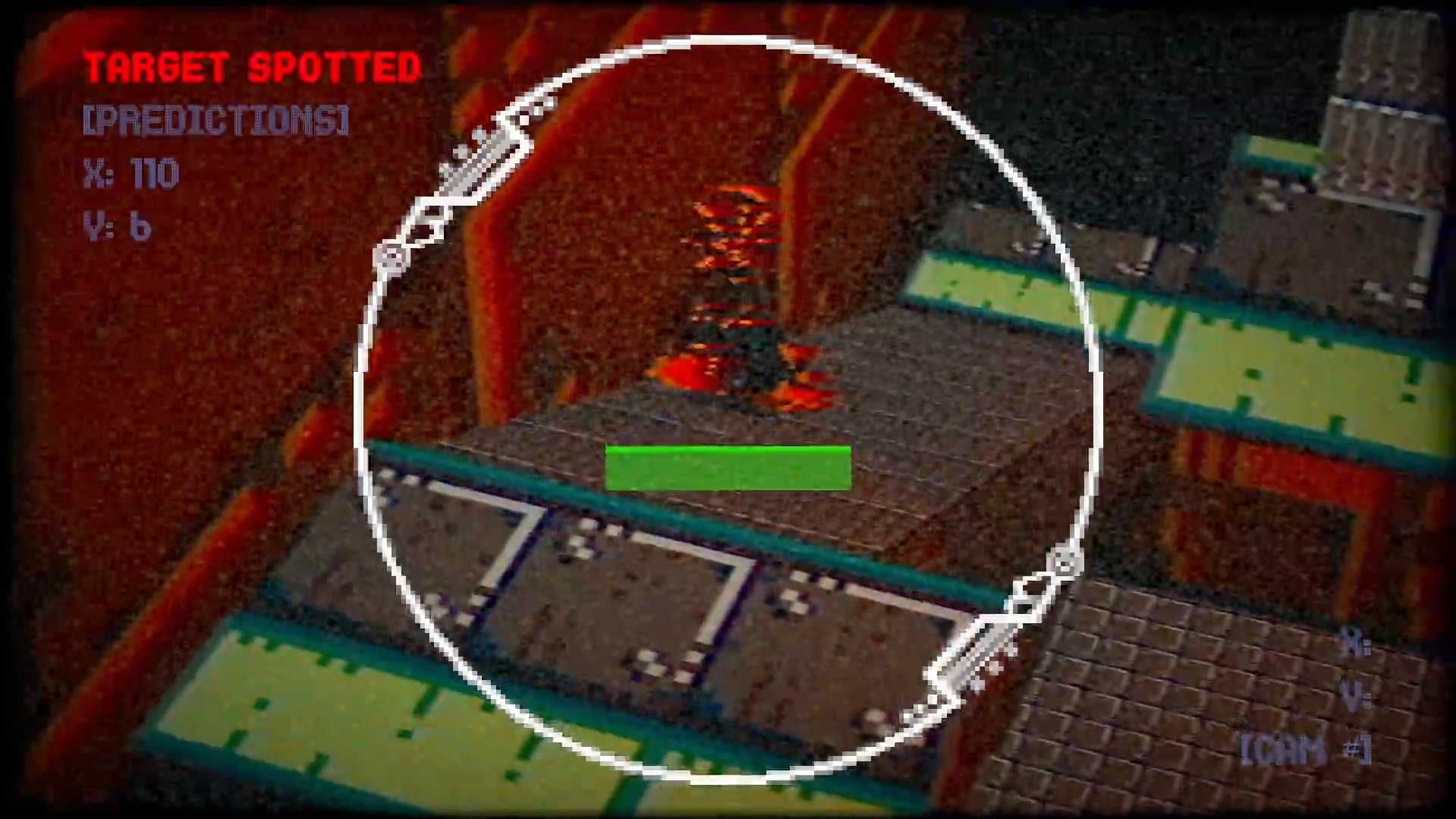
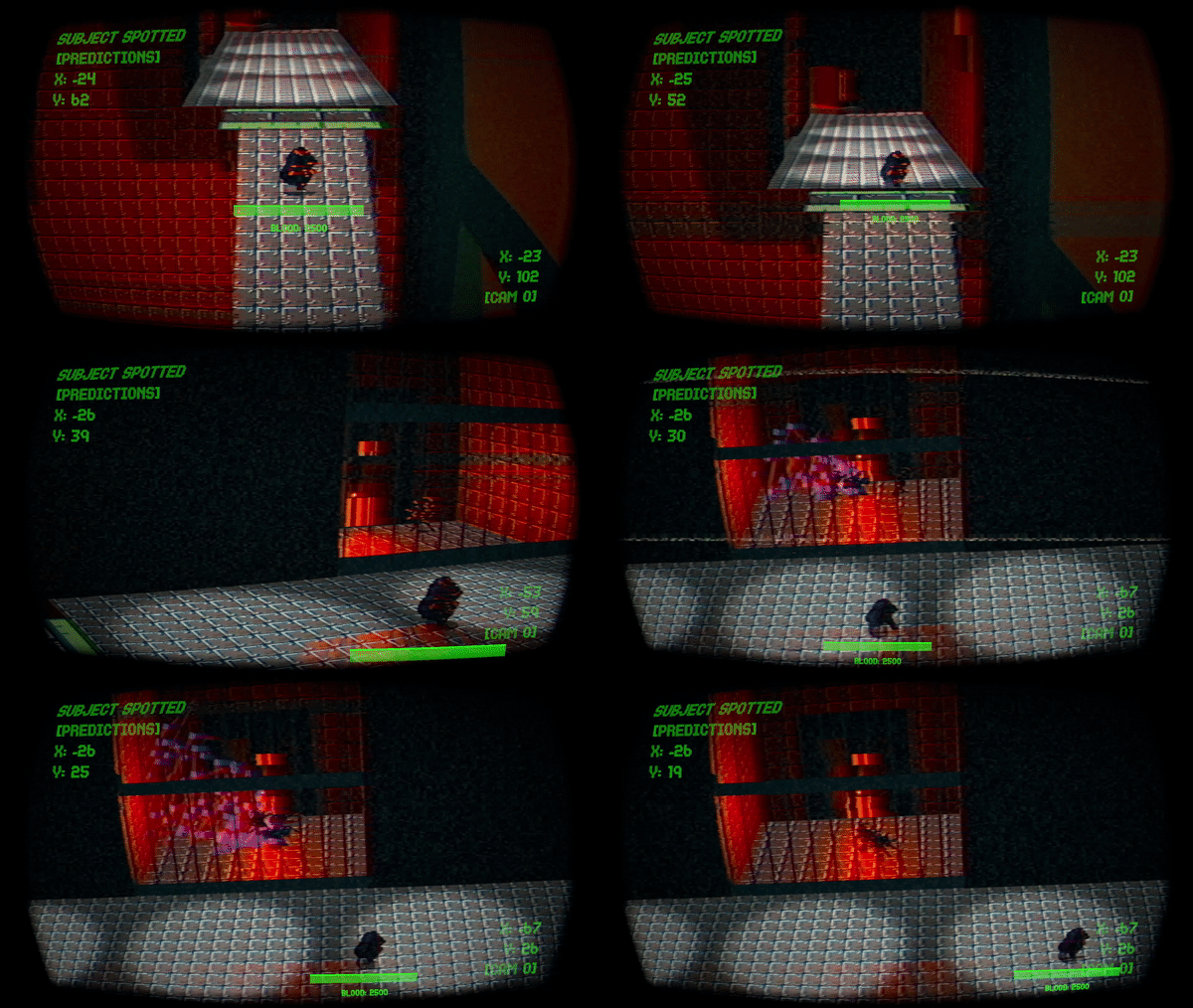
security-camera perspective
-
Laid out, lighted, and set-dressed entire level sequence.
Set up all camera shots.
-
Ran 2 playtests per week, revising the game to address player feedback.
Presented game build weekly to classmates and industry mentors.
Managed development with content macro, burndown chart, and task lists.
-
Scripted set-pieces and encounters, including 100-man battle and sniper sequence.
Gameplay
Gameplay Design Breakdown
Can a sense of power and fear coexist?
BLEED RUNNER started off as several exploratory prototypes, testing elements we were interested in building a game around:
Dynamic Health & Combat
2.5D Movement & Enemies
Fixed Camera System
With feedback from the prototypes, we honed in on creating a tense, action-packed experience built around dread and dissonance.
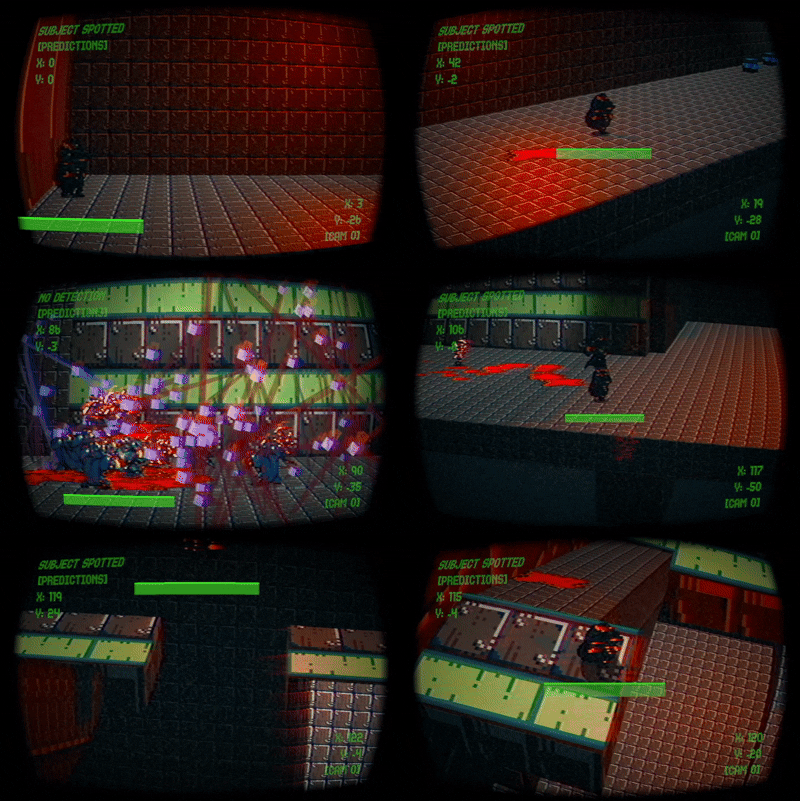
We wanted to create highs and lows - shifts from high energy to hopelessness and back again. The blood and camera systems supported this, while turning combat on its head - each group of enemies was actually a relief.
Prototypes & Early Docs
My prototypes focused on our experience goals: dread, dissonance, and a hard-earned power fantasy.
Once we had our concept in place, our early docs centered on sequencing and scope.
-
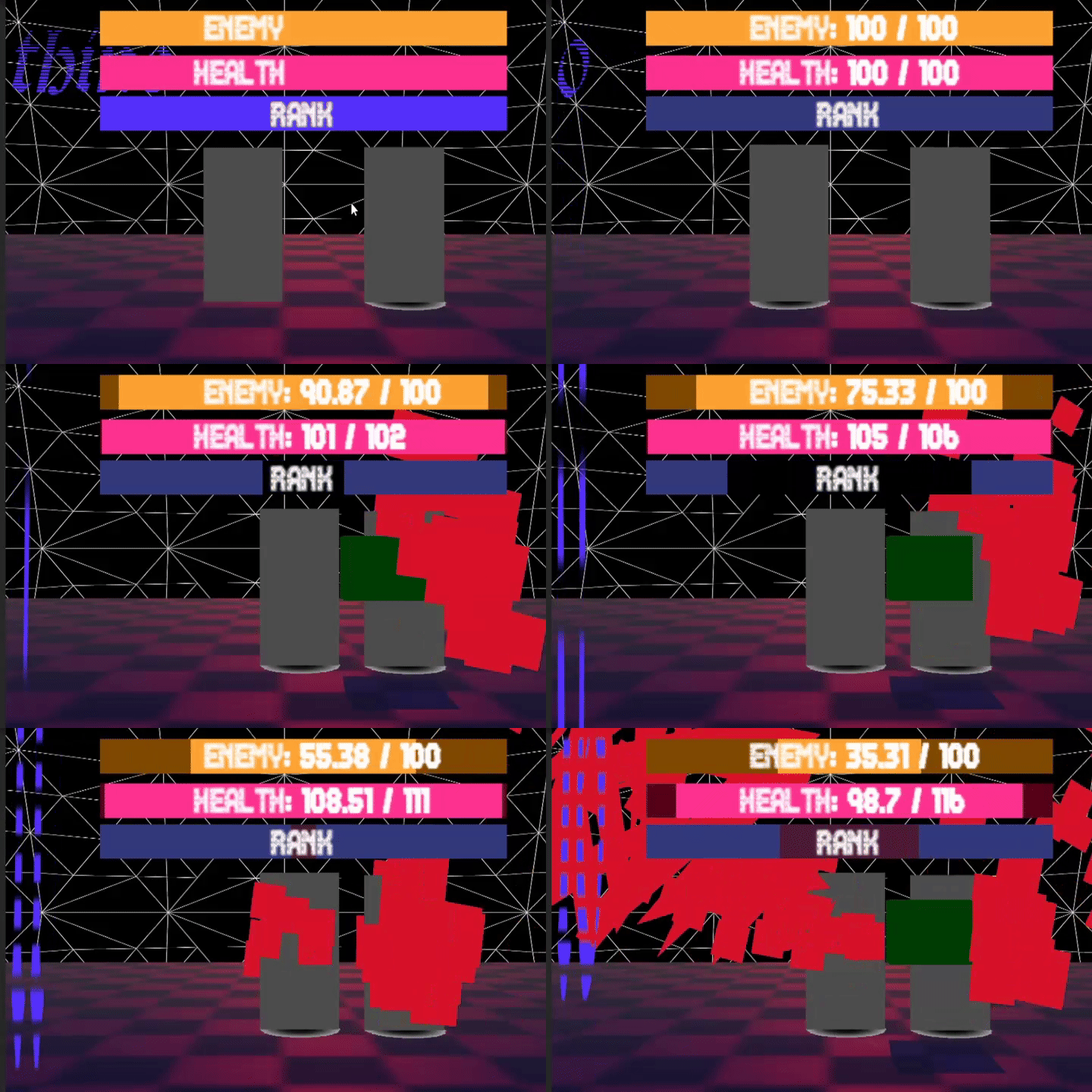
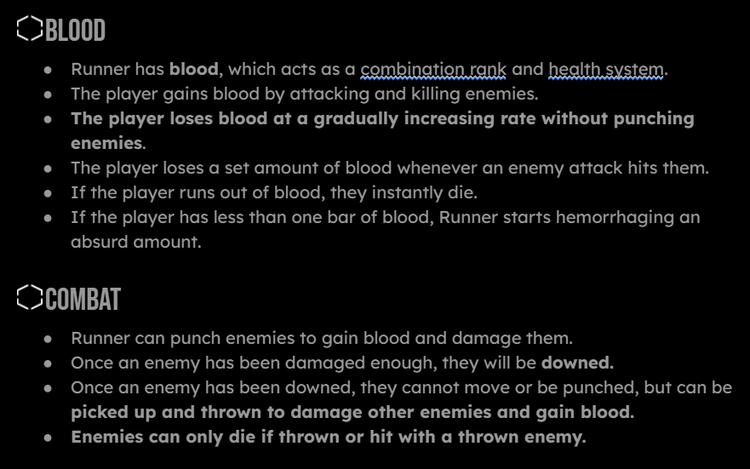
My first prototype tested the dynamic health system and punch. The goal was to create dread, surprise, and a sense of power from the health system alone.
Playtesters enjoyed the health system, but were interested in navigation as part of combat and wanted a stronger narrative context for gameplay.
-
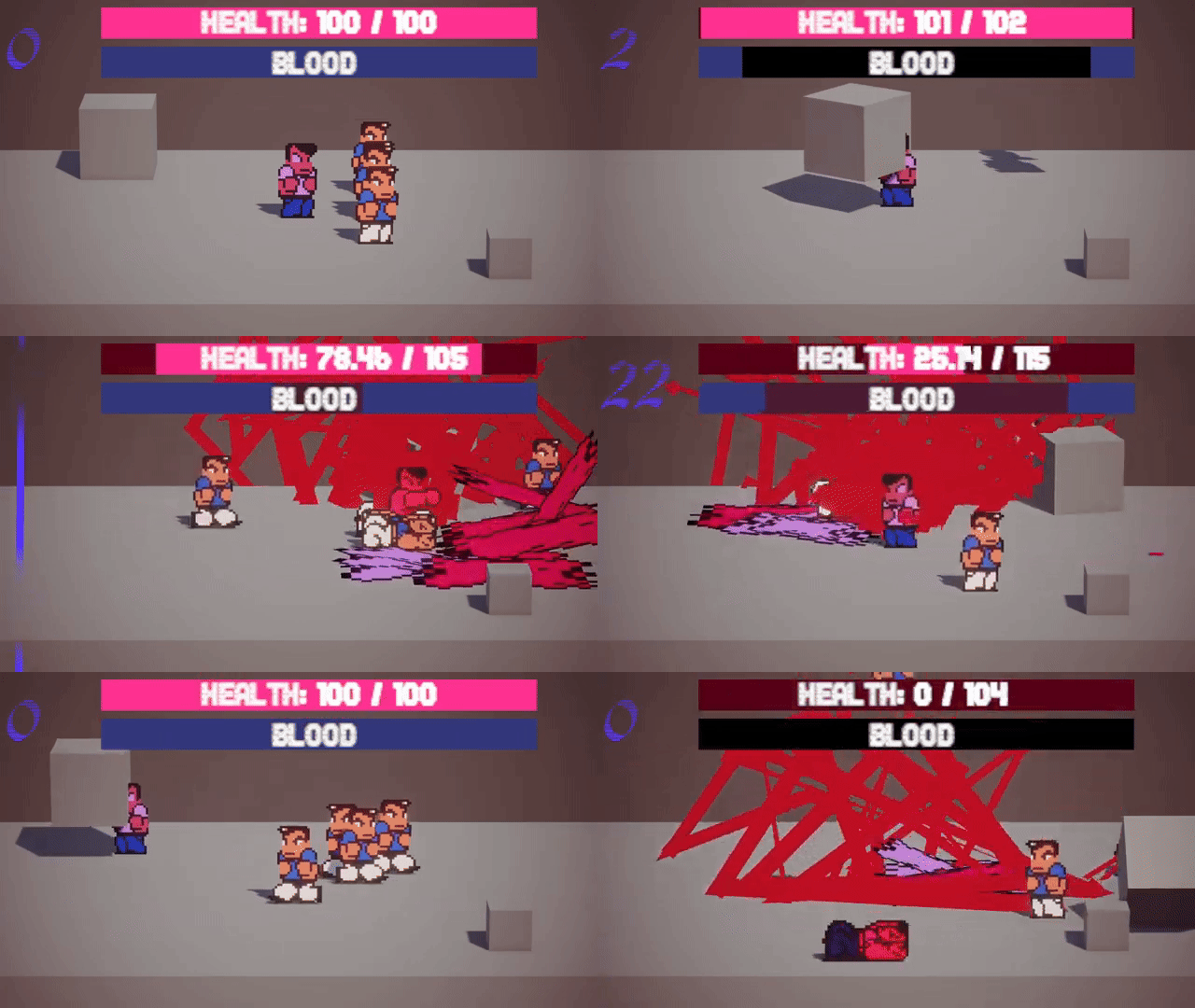
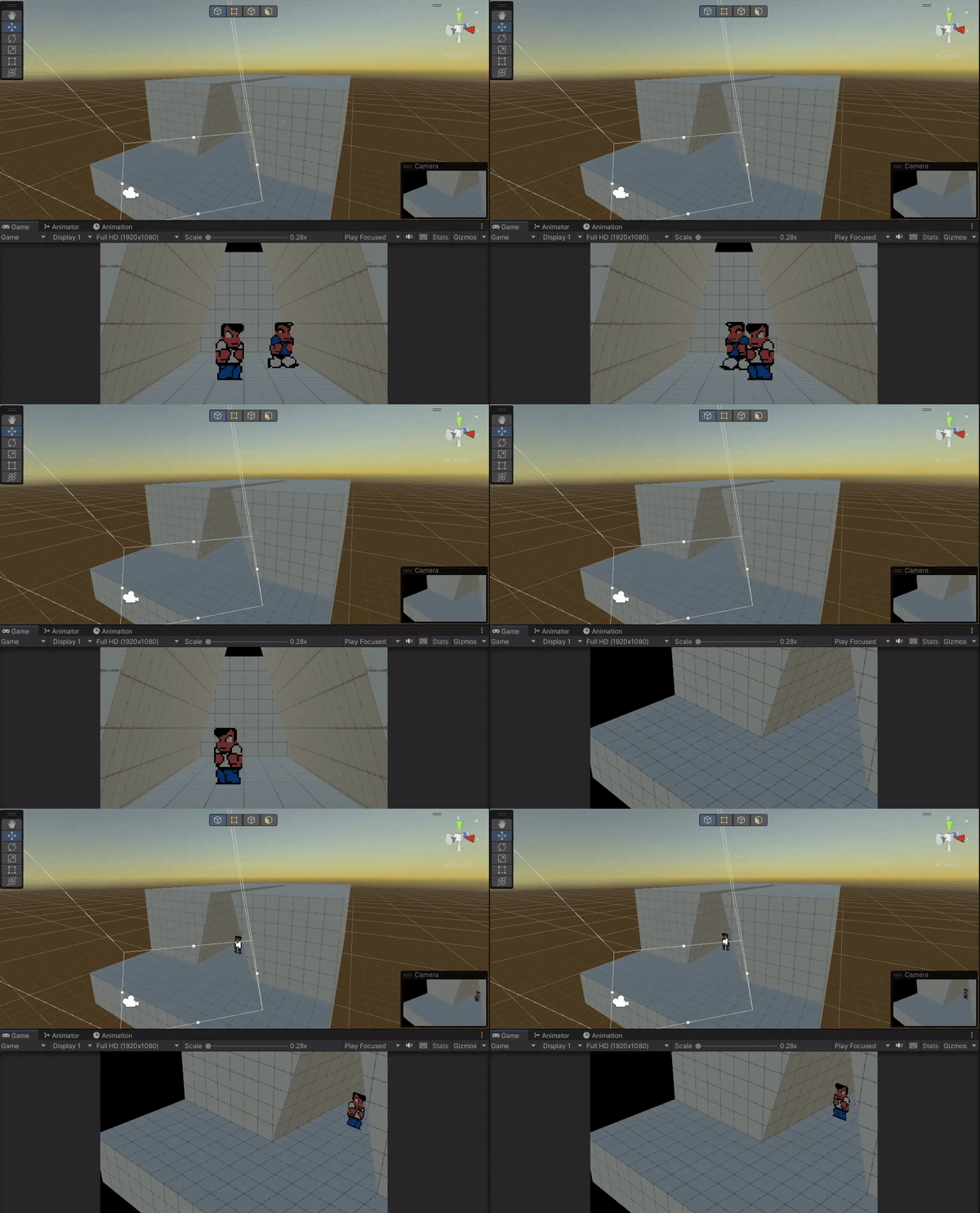
The next prototype fleshed out some basic enemy behaviors and the groundwork of our 2.5D look. We introduced throwing here, which got positive feedback.
We started to get a handle on 2.5D movement, but wanted to make more intentional use of the camera. -
Our last prototypes experimented with fixed and spline cameras, points of reference, and creating one consistent visual narrative.
Splines and automatic camera toggle were tested, but ultimately a Resident Evil style fixed camera system with occasional tracking cams worked best. -
Using the foundation we’d arrived at in our prototypes, I drafted a one-page concept with my partner to solidify the direction of BLEED RUNNER.
Even at this stage, mood and feel were at the forefront. -
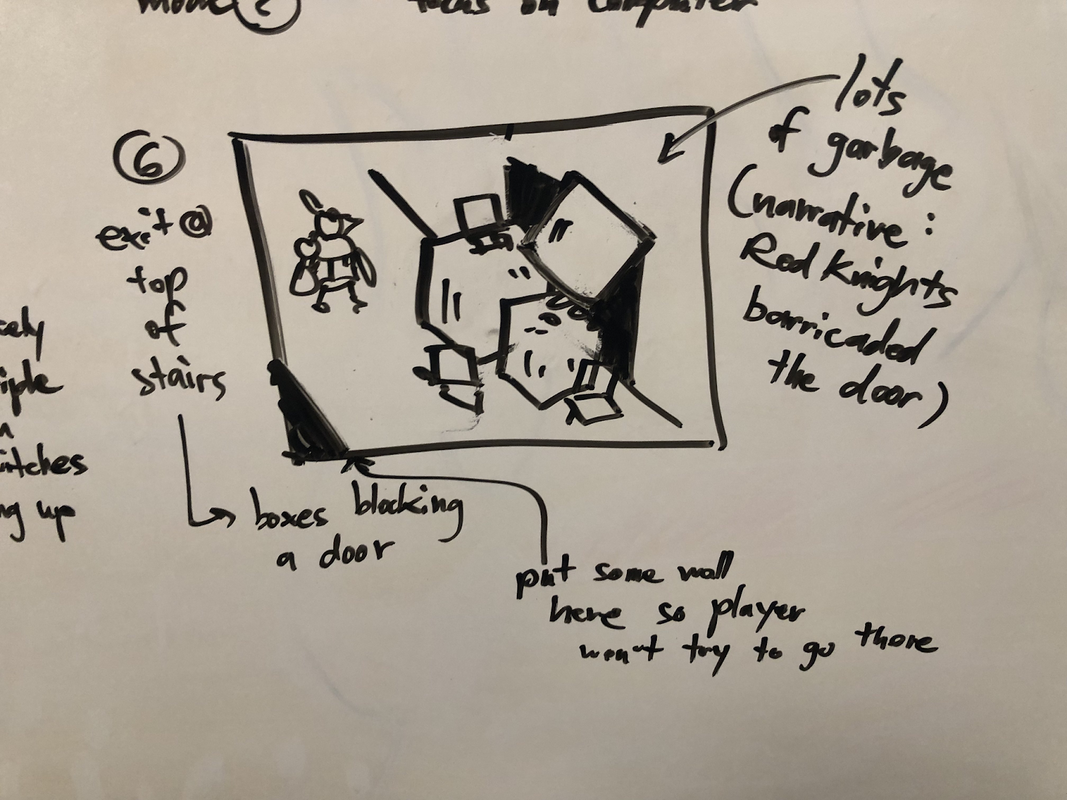
With our concept nailed down, we drafted out our sequence visually.
Thumbnails let us iterate quickly and determine if a shot was readable at a glance. -
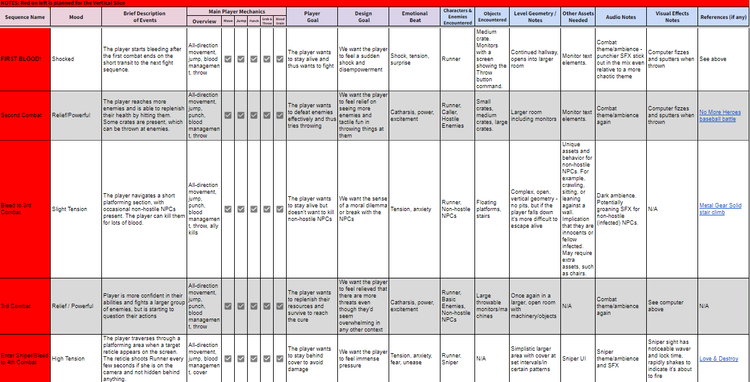
After shots, we filled in our macro to specify the needs of our level in greater detail.
Given our diegetic UI style, UI elements and screens were included.
Milestone Iterations
Full production was spent fleshing out our content and iterating our gameplay.
With a clear direction in place, most changes were made for clarity and game feel.
-
Our vertical slice featured drafts for all sequences and mechanics. Multiple encounters, the sniper puzzle, and the blood system were featured.
Bleeding started from the beginning of the game, scaled linearly instead of speeding up over time, and the level was textured but not dressed. Combat feel was pretty sparse.
The mood of this version was working, but the power fantasy and dread didn’t land in playtests. Blood, combat, and the level needed an overhaul. -
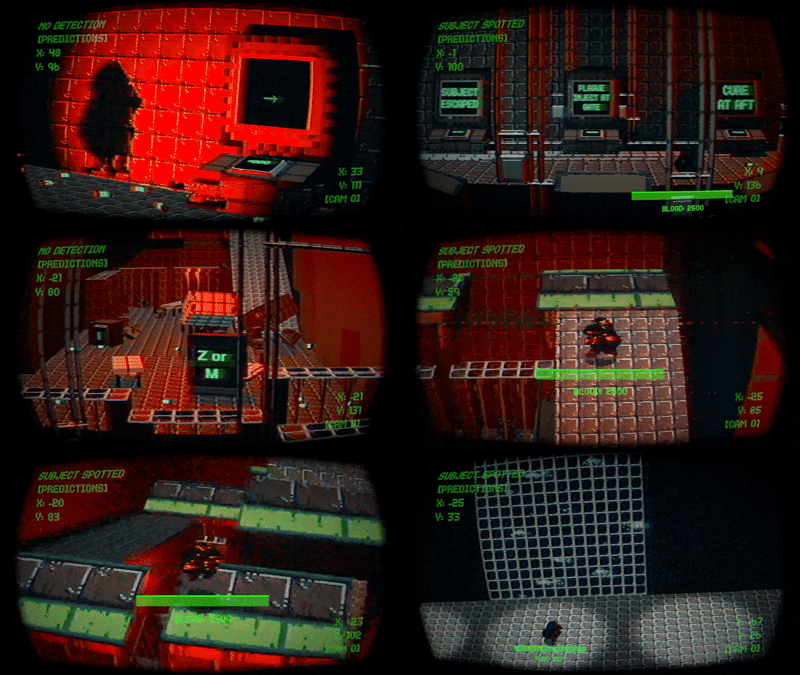
Alpha featured a full level and interface, with a strong onboarding section. Bleeding starts at a specific gate, but a callout for this hadn’t been implemented yet.
Combat feedback was stronger, and special sequences like the 100-man battle were implemented. The game was playable in rough state from start to finish. -
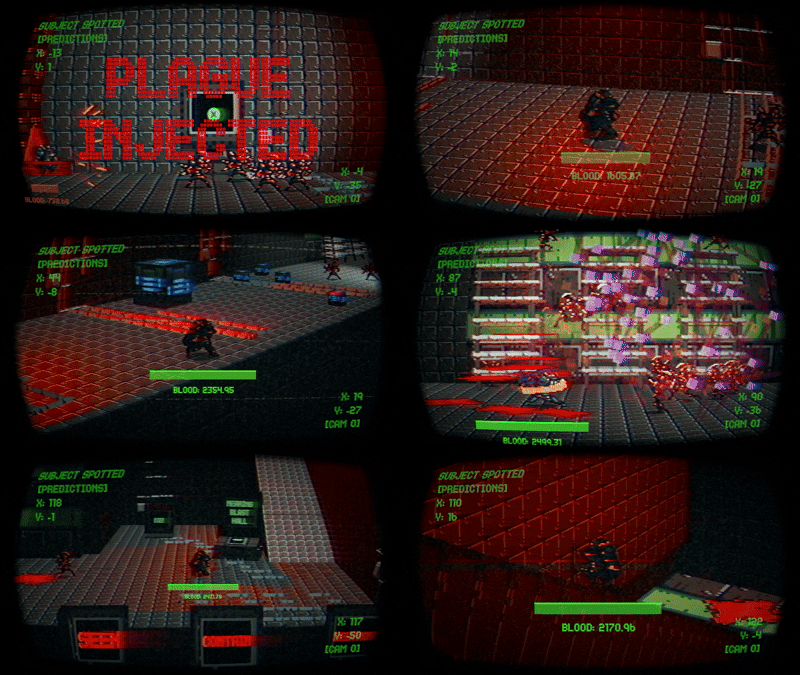
Beta heavily refined the alpha version with revised shots and lighting, scripted set-pieces, and set-dressing.
Key changes like the callout when bleeding starts made the game start resonating with playtesters, and novice players were working their way from despair to power. -
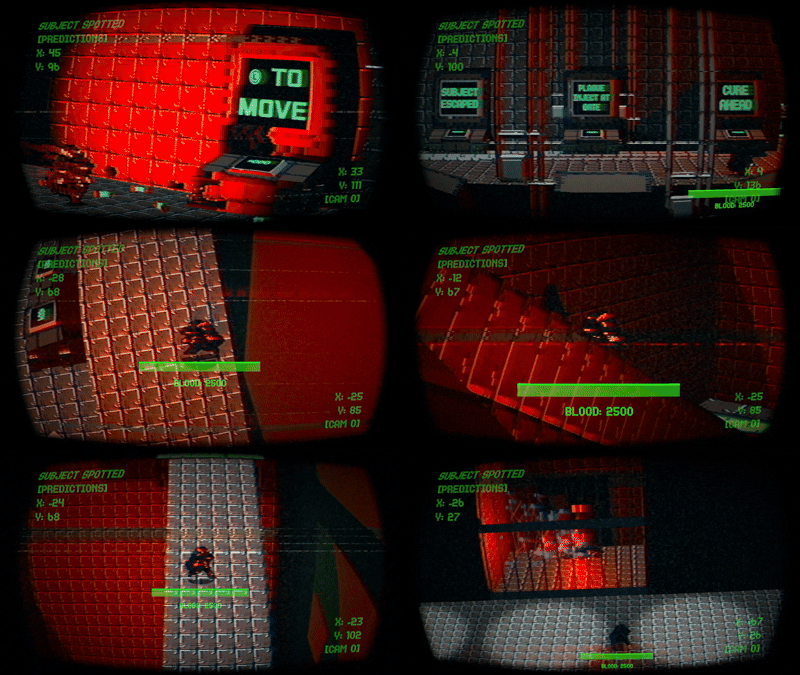
Release candidate work addressed bugs, some additional options and UI features, and some tweaks to combat balance.
BLEED RUNNER had taken shape as a complete product, and was getting a positive response. -
I later led publishing for BLEED RUNNER on Steam and the Epic Games Store. It was great receiving player feedback and seeing the game reach its audience - some players were ecstatic we’d made it!
What I Learned
-
Games are systems that react to the player. Throughout BLEED RUNNER, our design issues were almost always related to player feedback: a lack of feedback for an action, feedback that was too subtle, or something not responding sufficiently to the player’s actions. Identifying and solving these problems made the game consistently clear and rewarding.
BLEED RUNNER was an object lesson in the subtle moment-to-moment communication between player and game, and how the style of that communication changes when the player is put under pressure. Feedback needs to reflect player intent, but also the importance of an action’s effect on the game. -
Compositions and pacing work wonders. BLEED RUNNER was my first real 3D project, and we had very limited resources for assets. Using our camera and level layout intentionally let us craft a more engaging experience on a budget and realize the potential of our core concept.
-
Keeping a tight-knit team with shared references, regular communication, and known goals is what made BLEED RUNNER come together. My project partner, our classmates and professors, and our audio team were all vital to the process, and working with them brought the game to a higher standard.
Level Design Breakdown
Goals
-
![]()
One Visual Narrative
Each shot had to fit the intensity of the gameplay within it and build a larger narrative about the ship at a glance.
-
![]()
Clear Flow
Visual detail couldn’t clutter the flow of the level, since the player was under constant pressure. Depth, platforming, and obstacles had to be used sparingly.
-
![]()
Suggesting a Bigger World
Building the mystery of the spaceship through pacing and cinematography let us suggest greater threats at play.


Process
-
![]()
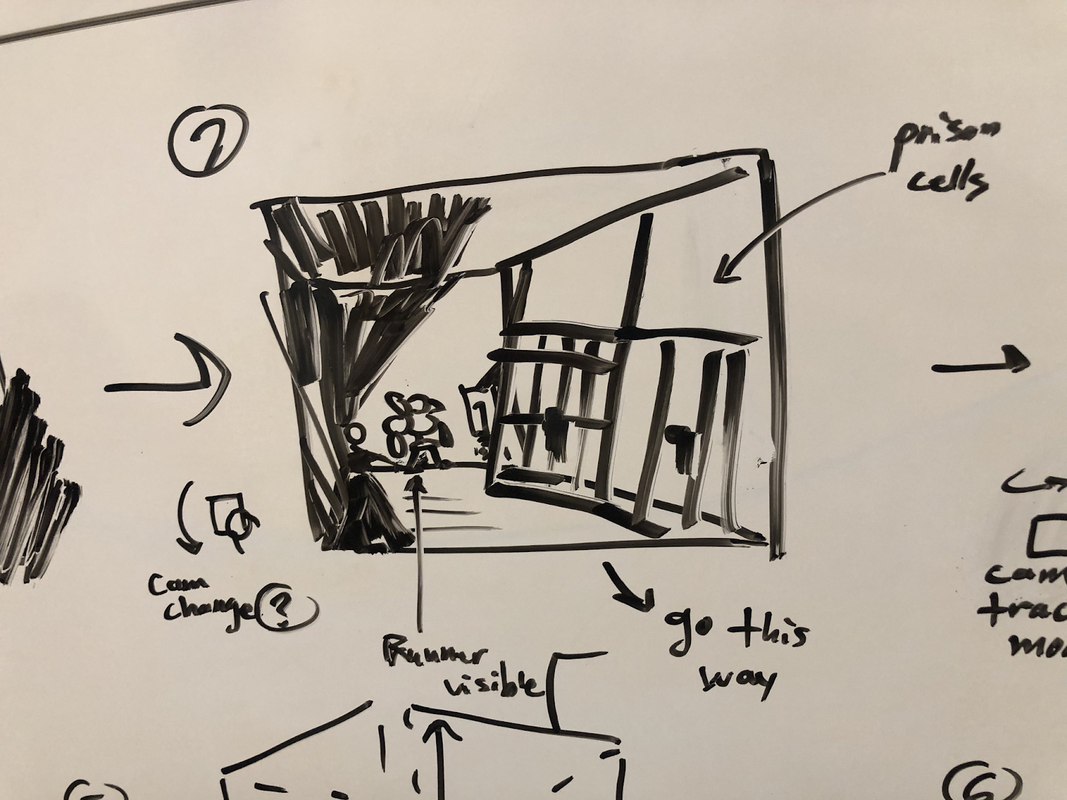
1. Storyboards
The level is designed shot-by-shot with thumbnails, starting with the shot type and key details. The visual narrative and purpose of the space are nailed down first.
-
![]()
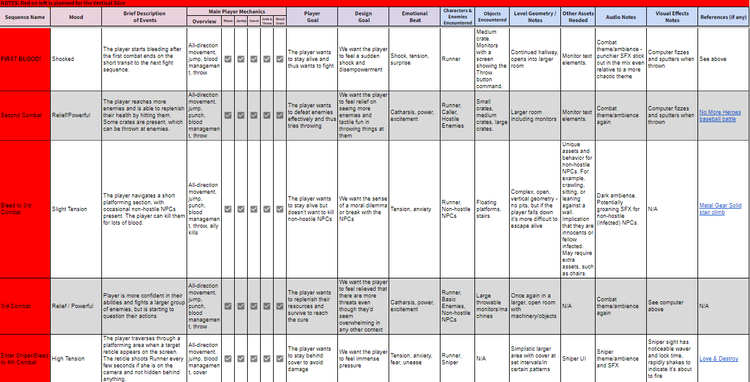
2. Macro
Each shot is marked as a row on the macro. Mechanics, emotional beats, and assets are detailed here for reference during the layout process.
-
![]()
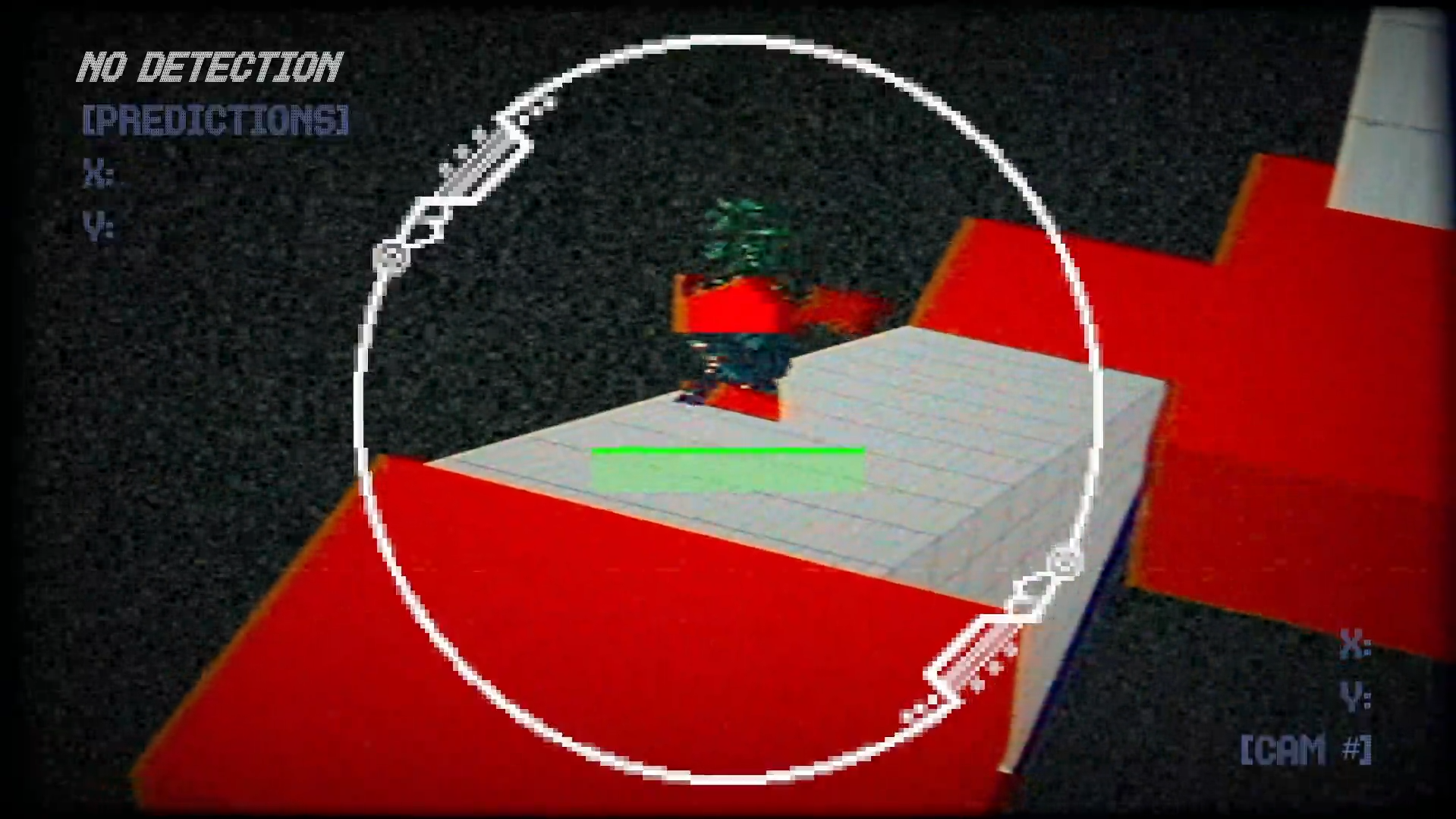
3. Greybox & Shot Layout
General space and interactables are drafted, and shots are tested in the space. Flow and visual clarity are the focus here.
-
![]()
4. Lighting & Dressing
Lighting, color, and texture are used to draw attention in the shot and create a stronger sense of place. We use these along with the shot itself to define the depth of a space.
-
![]()
5. Set Pieces
Any unique features or triggers for the shot are implemented and tested.
Rules
-
![]()
Depth is Difficult
Depth is the hardest axis for players to judge, especially with varied camera angles, 2D characters, filters, and lighting. Navigation toward or away from the camera on the depth plane is more difficult.
We were able to use this to our advantage, but flat and deep space had to be used intentionally. -
![]()
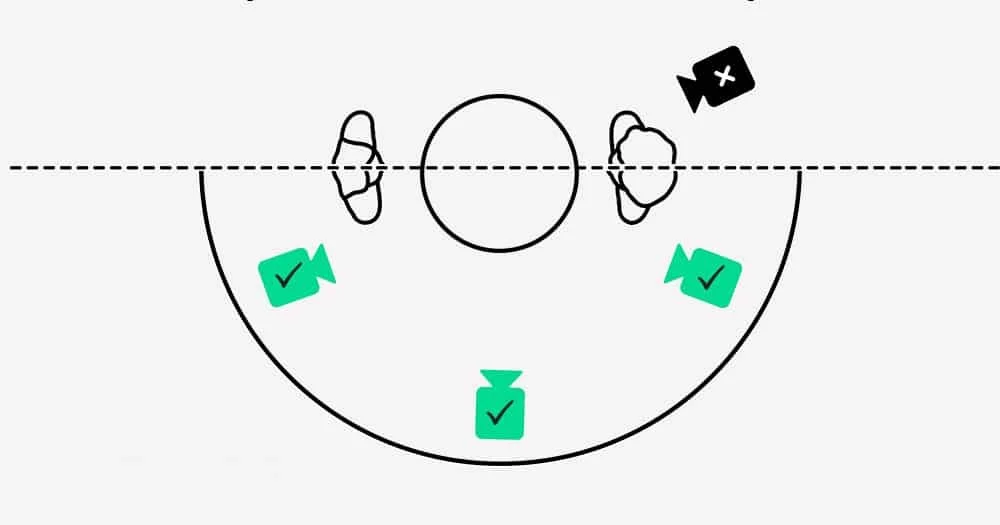
90 Degree Rule
The camera cannot shift more than 90 degrees between shots, and cannot cross the line of action. It’s jarring and breaks control if a shift is too intense.
Tracking cameras helped us manage corners and more extreme angle changes with fewer total shots.
Placing shot changes in afforded spaces (in frames, blocked areas etc.) made fixed cameras easier to navigate. -
![]()
Inverse Intensity and Fight Cadence
Unlike other beat-em-ups, combat encounters in BLEED RUNNER are a relief.
These are the moments when players can let loose and restore their resources between tense runs.This is why the finale puts the 100-man battle before a long run to the med bay: it’s the ultimate combat release followed by the ultimate run.